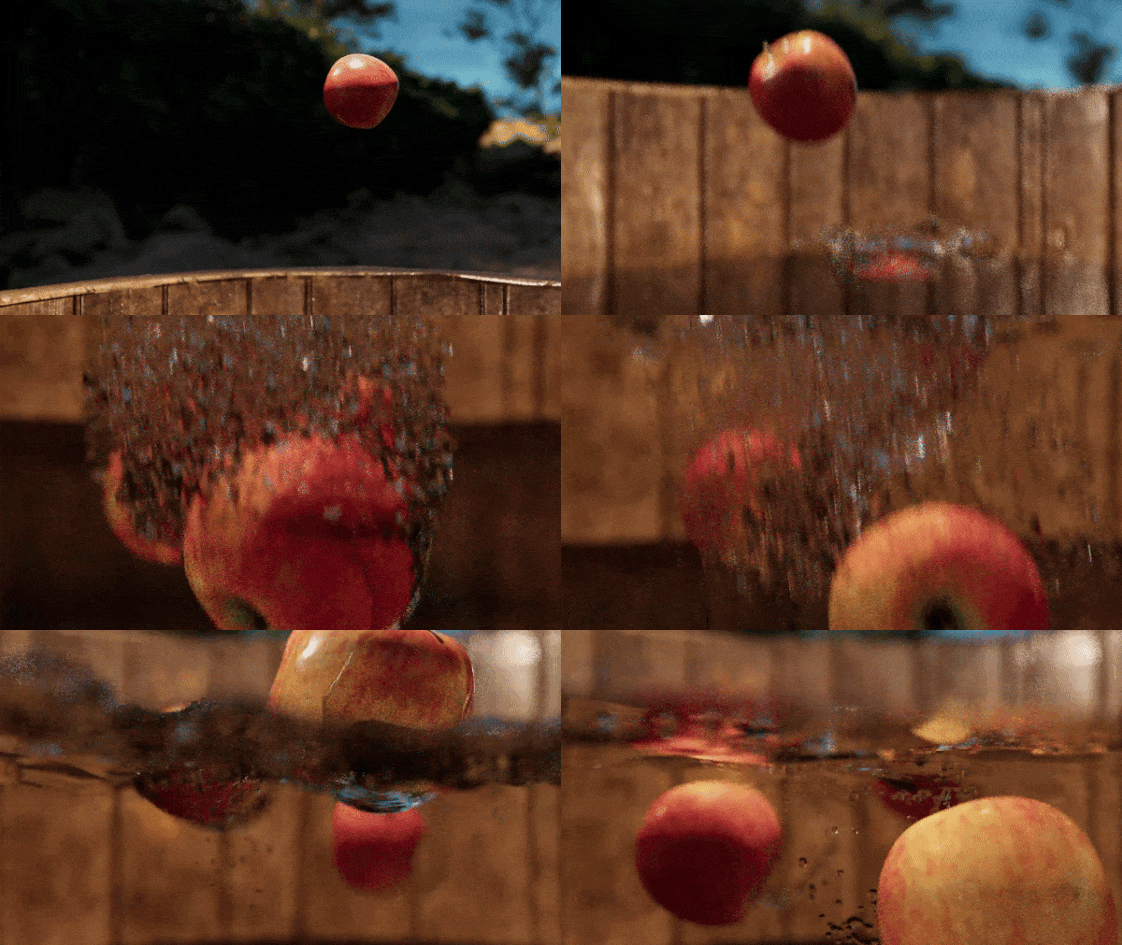

update as of 27-oct-2024
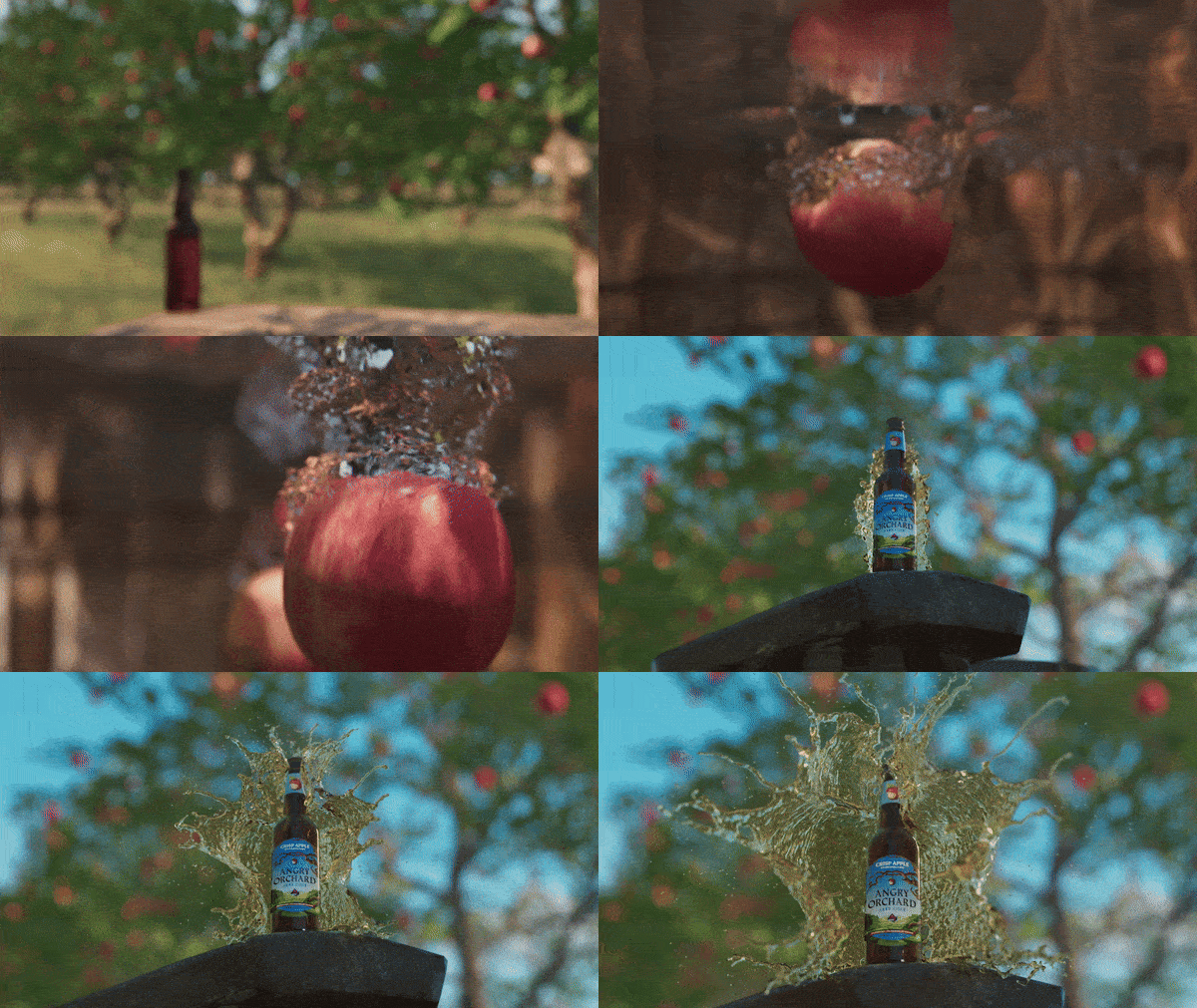
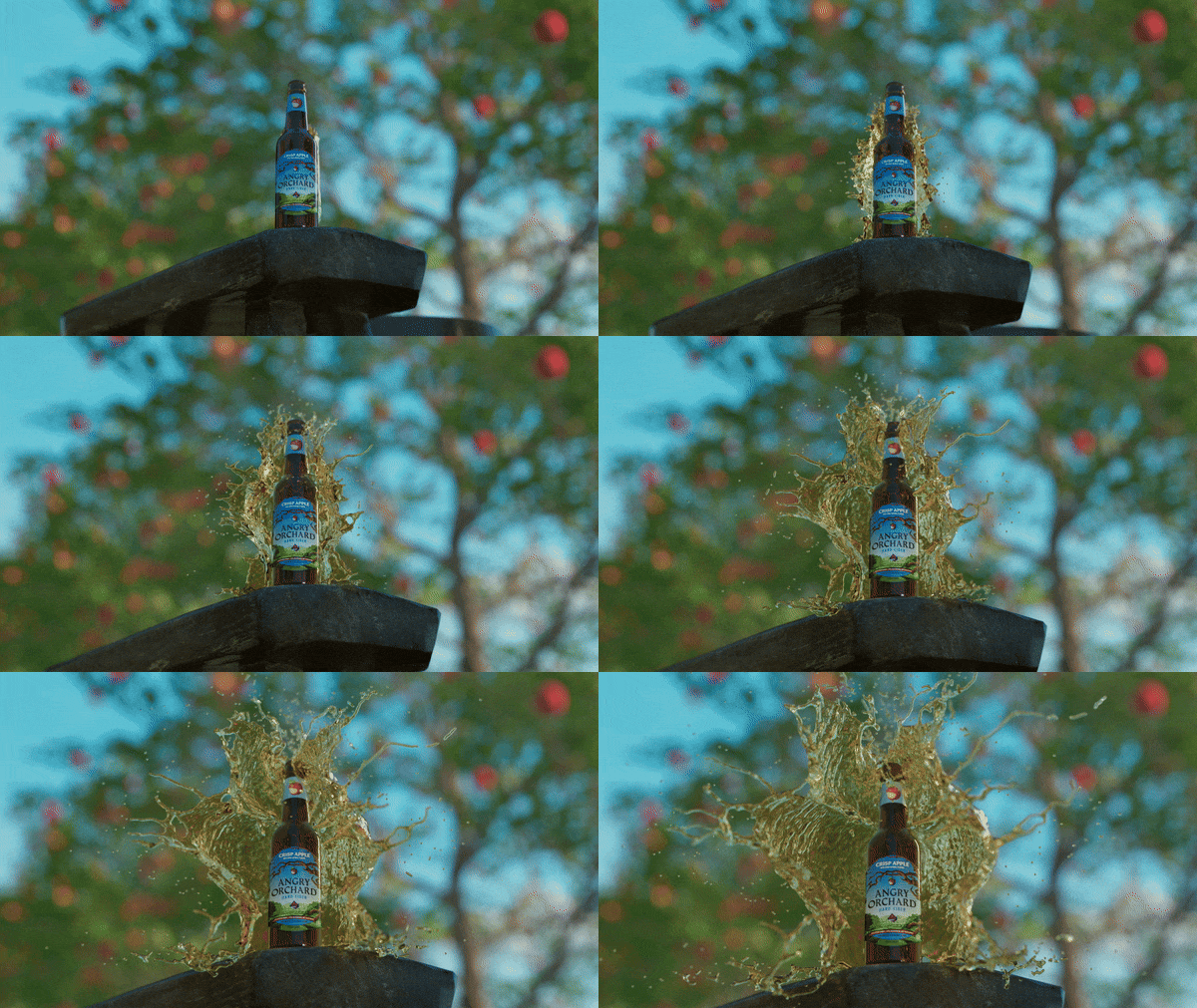
shot 6 render
Shot 6 has been re-rendered with adjustments to pacing by adding frames at the beginning and trimming frames at the end. To enhance the atmosphere, subtle god rays were added from the back using volumetric lighting in Redshift. The issue with stagnating particles has improved by aligning the substeps between the retime and file cache nodes, ensuring a smoother particle flow.
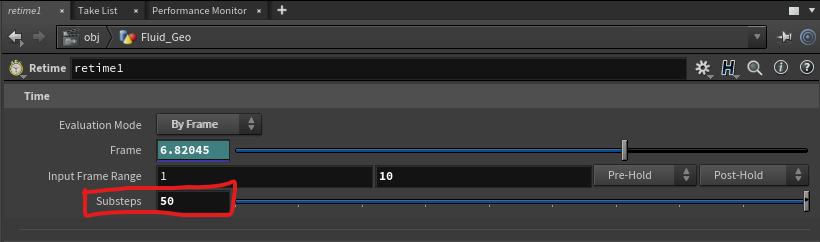
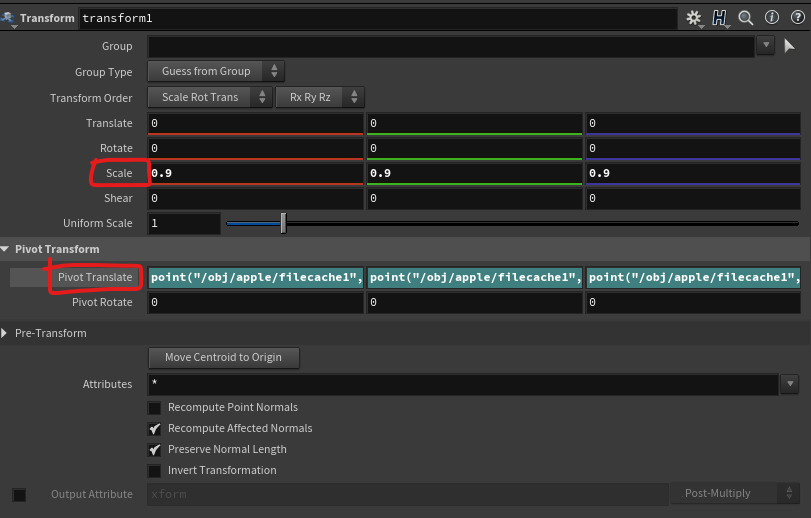
Retime Node - Substeps
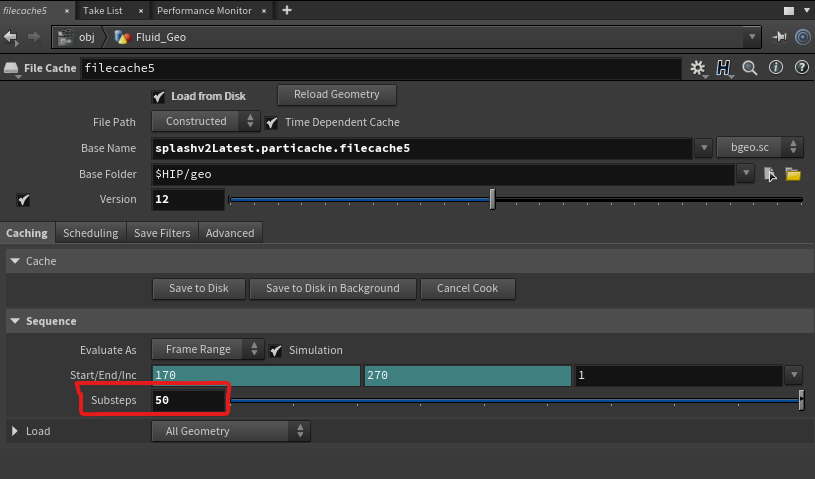
File Cache Node - Substeps
update as of 25-oct-2024
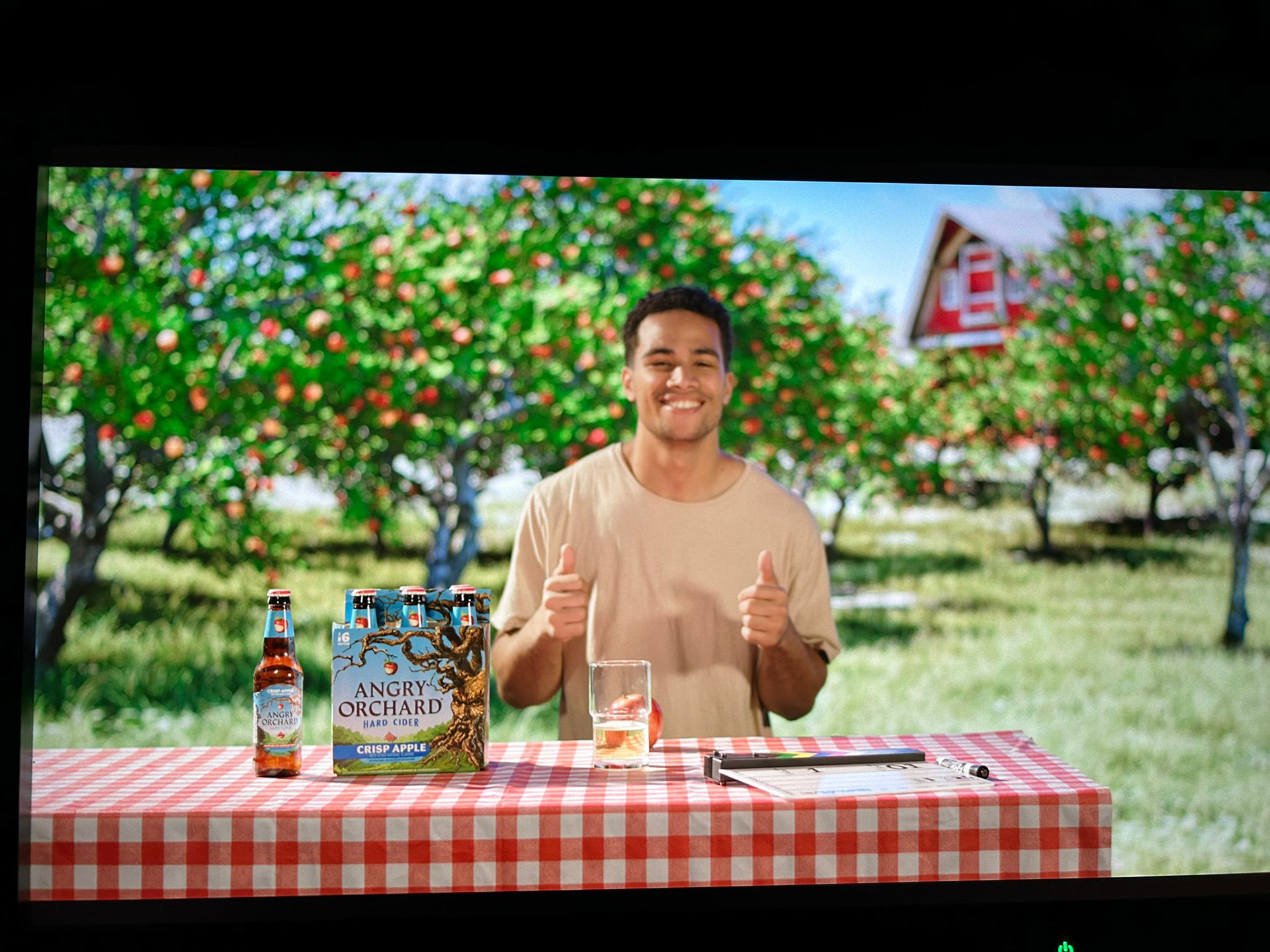
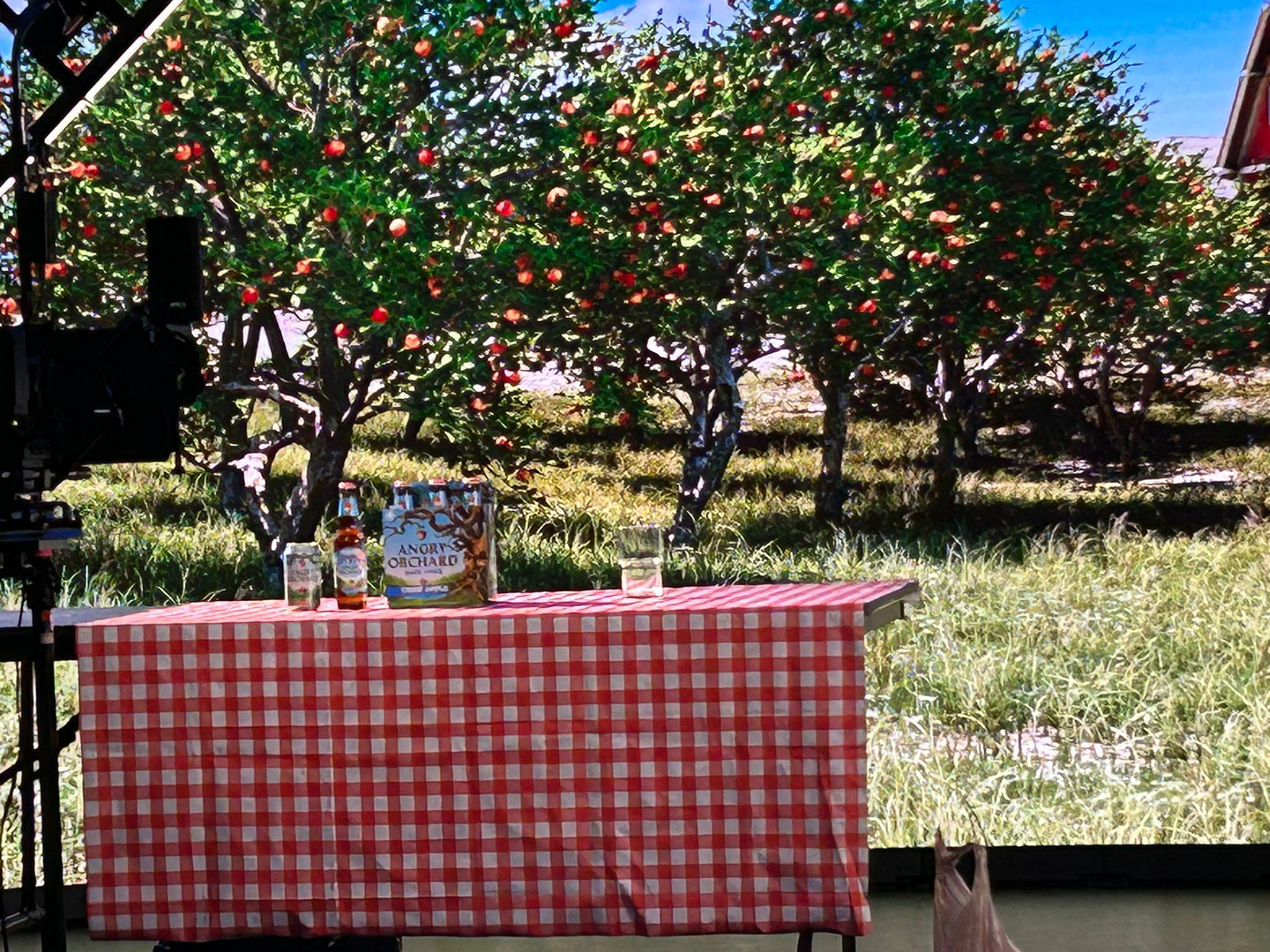
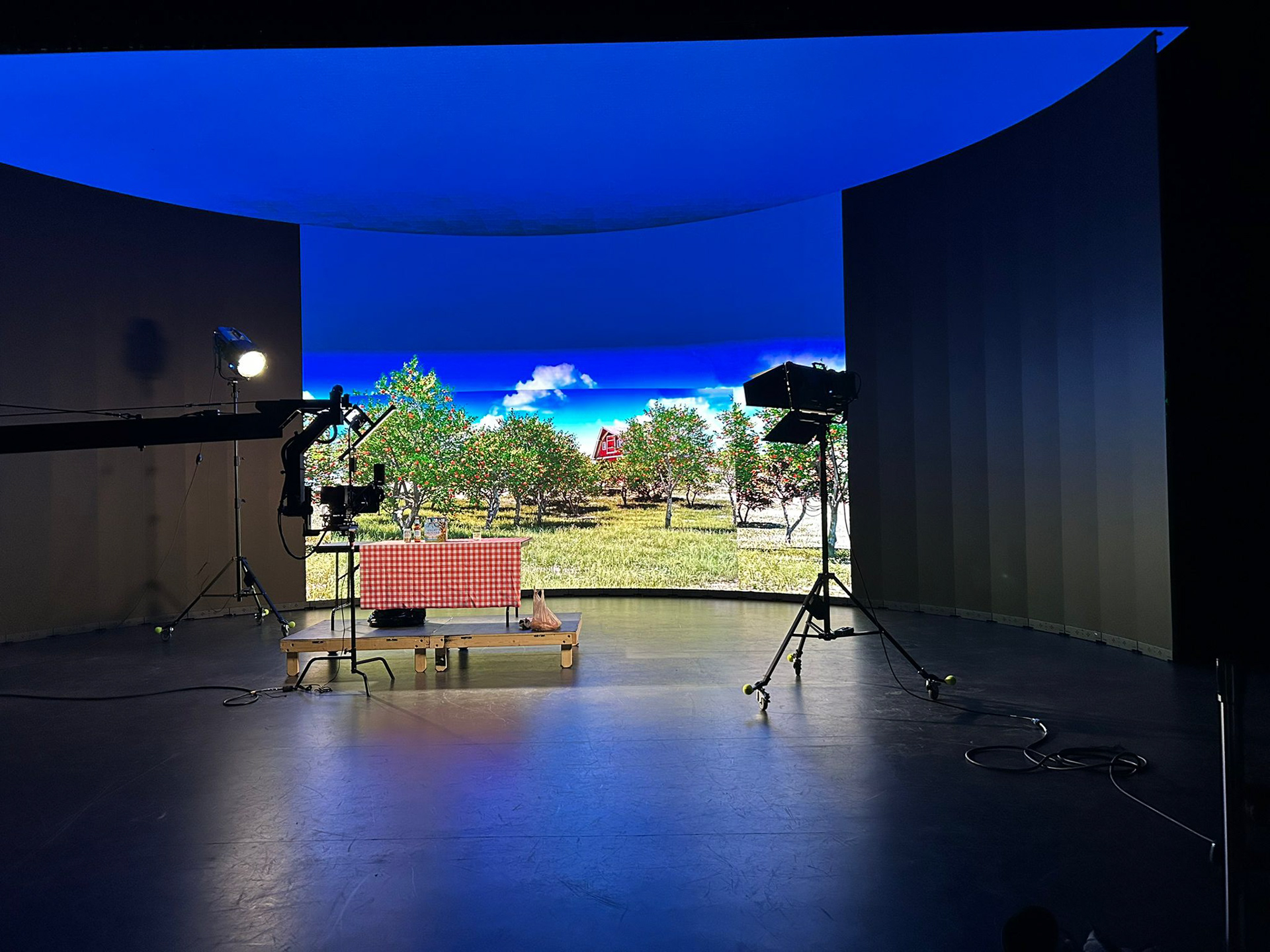
reshoot at the xr stage for shots 7 & 8
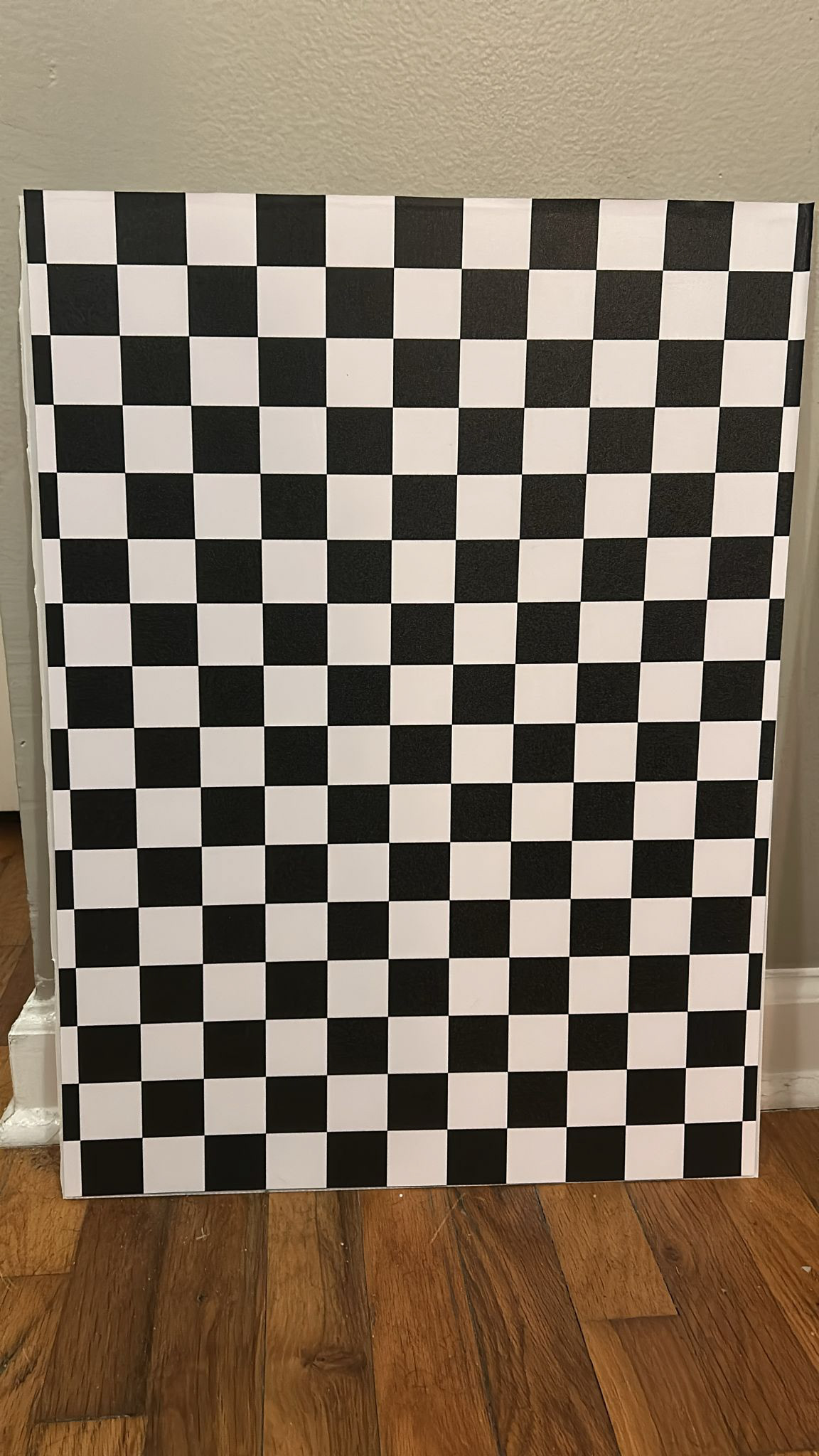
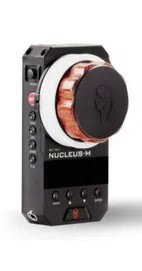
The primary feedback for shot 7 was that the shadows from the trees were too dark and lacked detail. To address this, Donnie, Chris, and Connor from the XR team tried several techniques, eventually adding point lights to each shadowed area to enhance visibility and depth. I also had the opportunity to serve as the focus puller, using the Nuclear Lens Controller for precision, similar to the previous shoot. Additionally, following Professor Gaynor’s suggestion, we performed a checkerboard test to check for lens distortion.
An exciting aspect of the day was welcoming visitors to the stage, including Joshua, Meta’s VP of Product Design and the visionary behind the Ray-Ban Meta glasses and the new Orion AR glasses. SCAD’s VP, Darrell Naylor-Johnson, also attended. It was a great opportunity to introduce ourselves, showcase our project’s progress, and gain valuable insights about the Orion glasses directly from the Meta team.
update as of 24-oct-2024
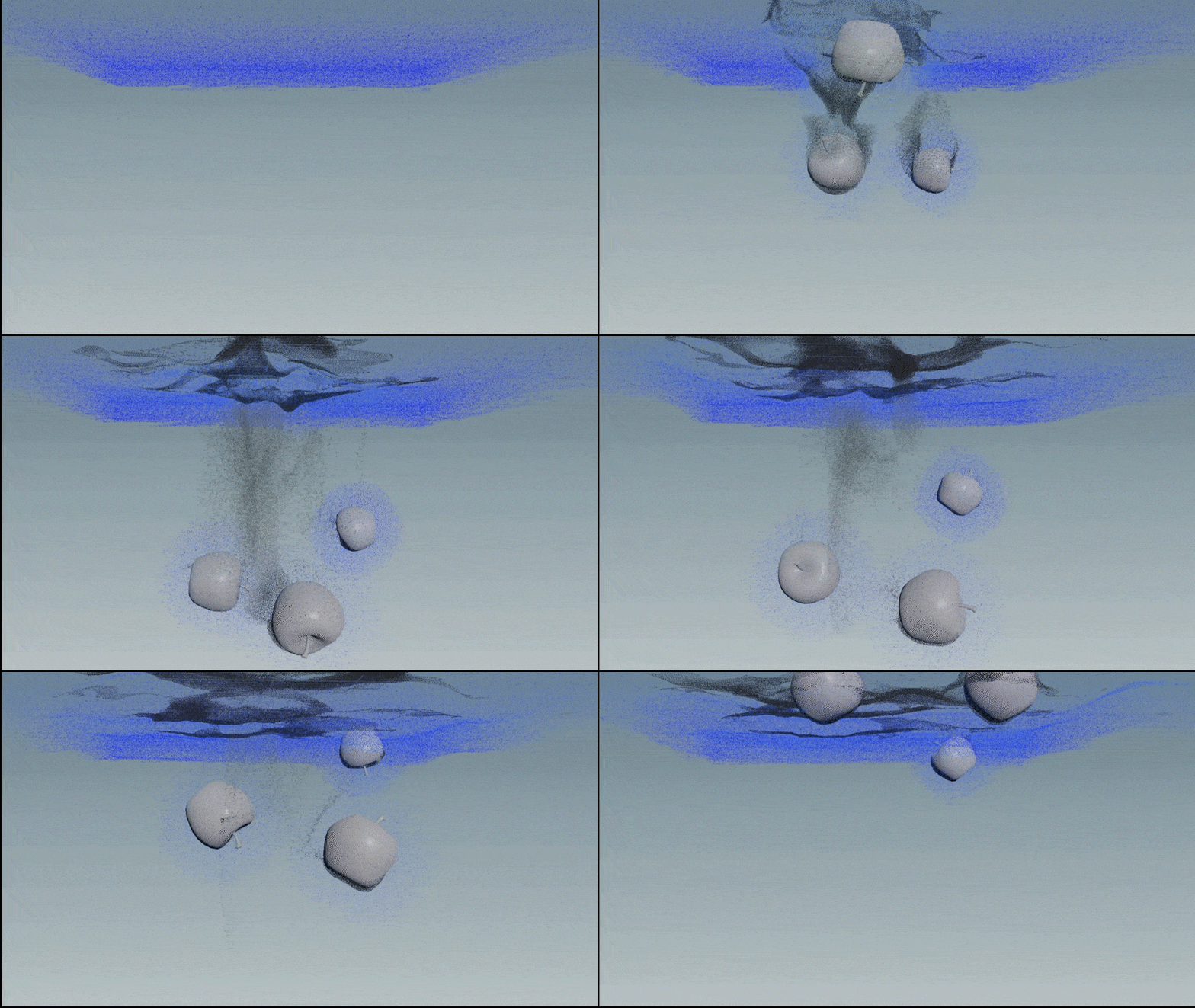
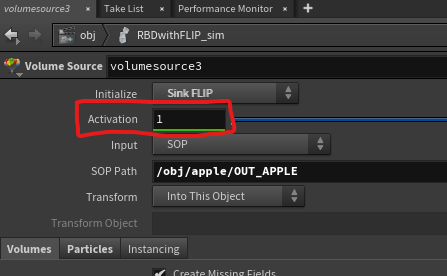
In shot 5, the approach to turning off the emitter on the foreground apple involves deactivating the Volume Source node’s activation at a specific frame. This method provides control over exactly when the emitter stops, preventing any emissions beyond the intended point. Currently, testing is underway across different frames to find the most effective timing for a better outcome
update as of 22-oct-2024
Feedback from Natasha:
Shot 1: The focus seems to be more on the oven than intended. A “squint test” could help in balancing the focus toward the main subject.
Shot 7: The shadows appear very dark; increasing shadow detail would enhance the shot. Adjusting the table to align parallel with the frame may improve composition.
Shot 3: The shadow directly behind the bottle could be lightened to improve visibility.
Shots 4 & 5: Ensuring the lighting and speed match during the apple fall would make the transition smoother.
Feedback from David:
Shot 6: Adding a few frames at the start and trimming the end could enhance pacing.
Shot 5: Consider turning off the emitter on the foreground apple sooner for a cleaner look.
Shot 3: Reducing the number of apples falling may create a stronger visual impact.
Shot 7: The composition could be improved by centering the actor or positioning them along the rule of thirds for a balanced frame.
tasks :
- Reshoot shots 7 & 8 on the XR stage (scheduled for Oct 25, 2024).
- Adjust shadows in shot 3 and harmonize lighting in shots 4 & 5.
- Refine the initial transition sequence.
- Modify the environment in shot 1 to reduce focus on the oven.
- Fix the emitter timing in shot 5.
- Recut shot 6 to align with feedback.
- Enhance continuity and transitions across all shots.
- Follow up with the sound designer.
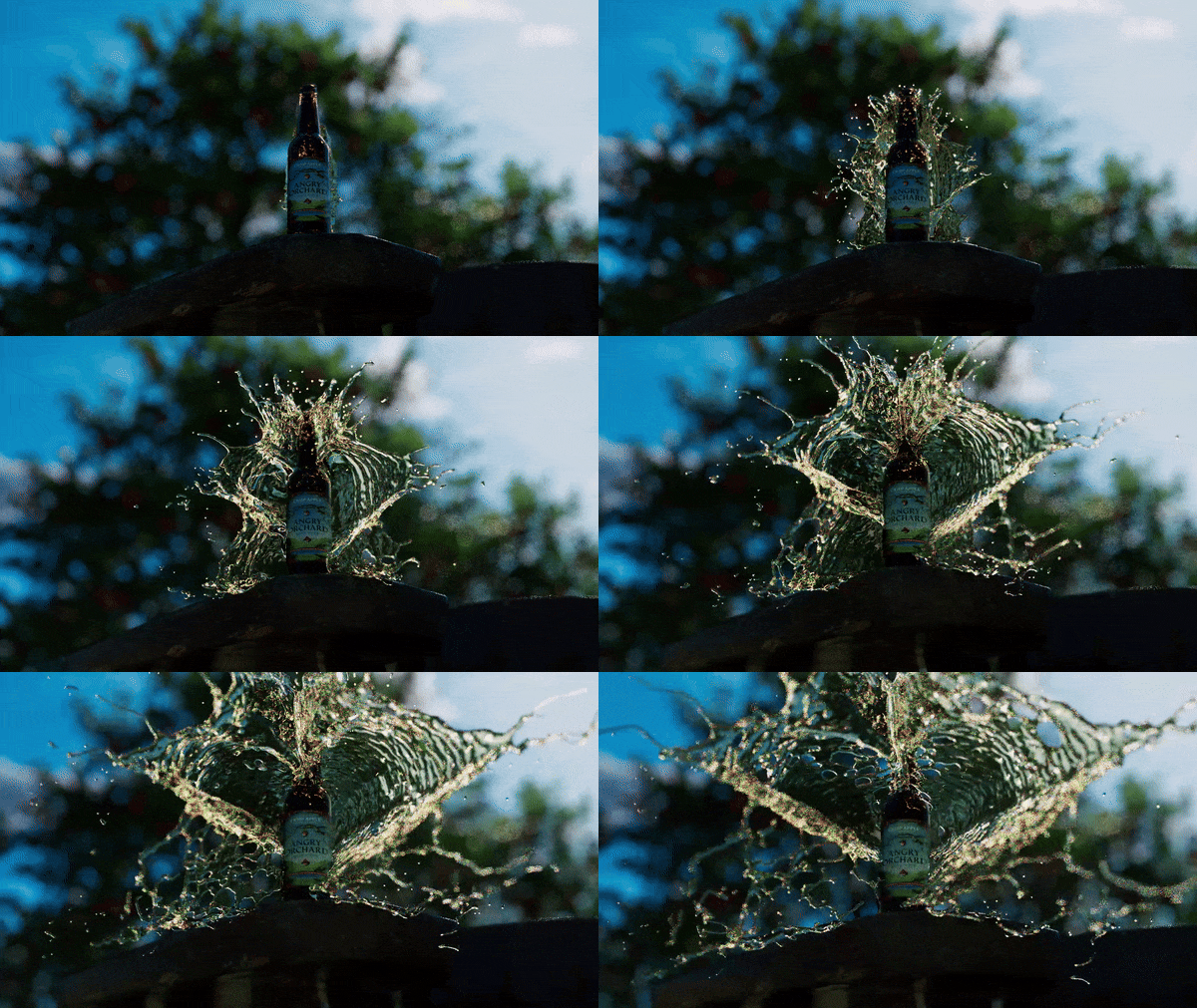
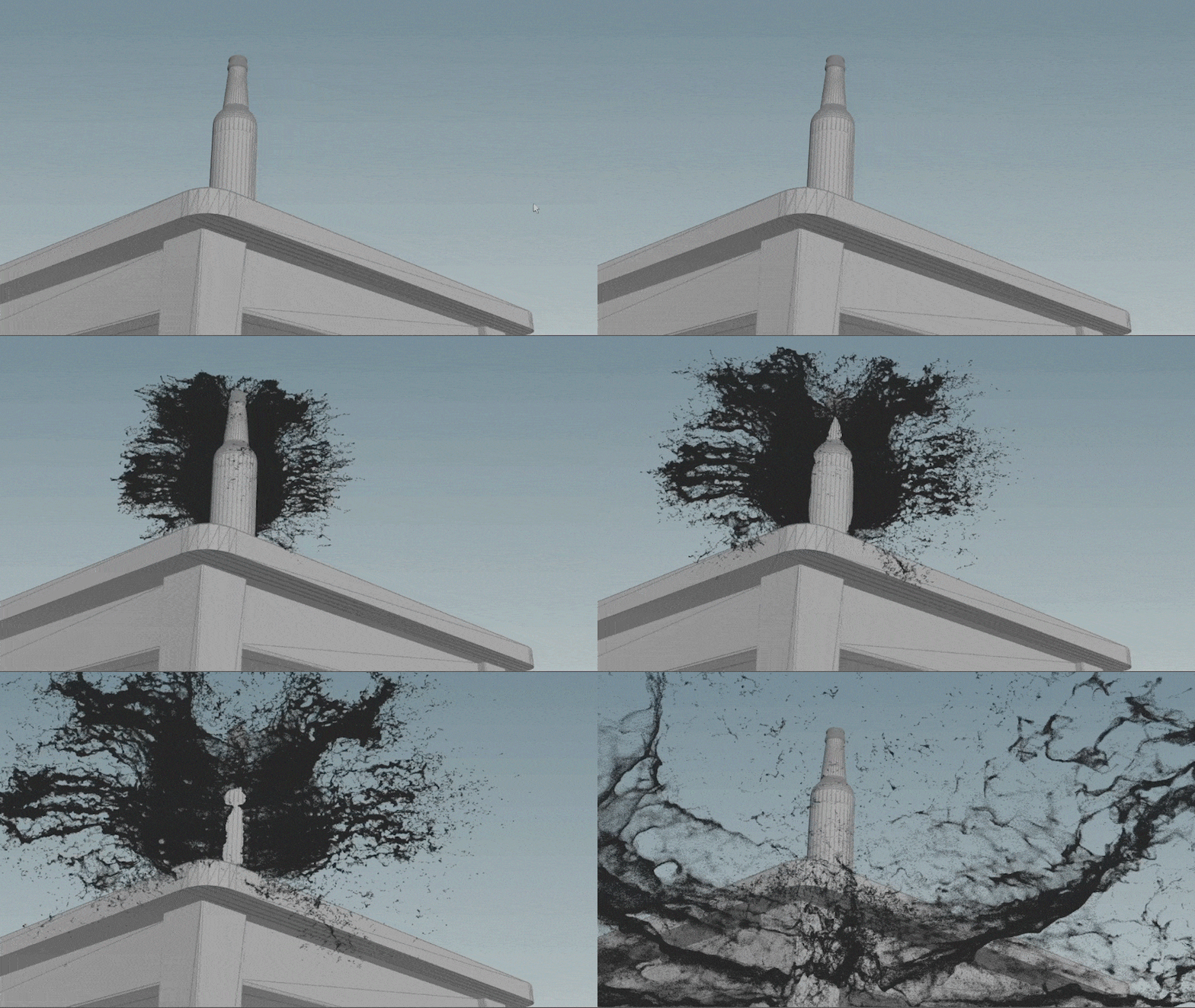
Splash shot (shot 6) - artifacts
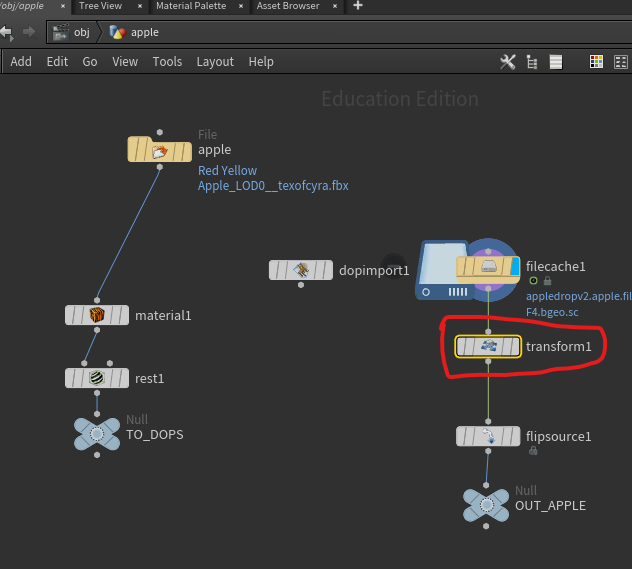
The artifacts from the stagnating particles were minimized by synchronizing the substeps between the file cache node and the retime node. The issue occurred because the retime node was interpolating intermediate frames instead of utilizing the accurate cached frame data. Matching the substeps in both nodes, ensured consistency, which helped reduce the artifacts.
the next step is to experiment with different substep values and also synchronize them with the FLIP solver to fully eliminate the artifacts.
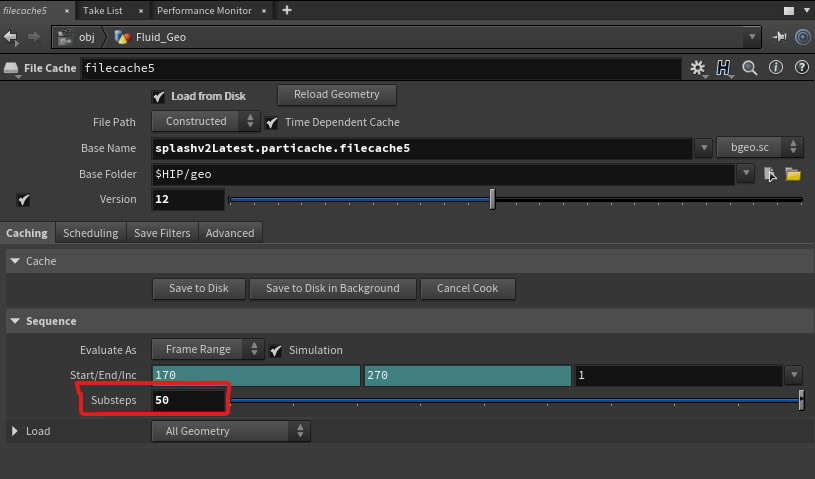
FileCache Node - Substeps
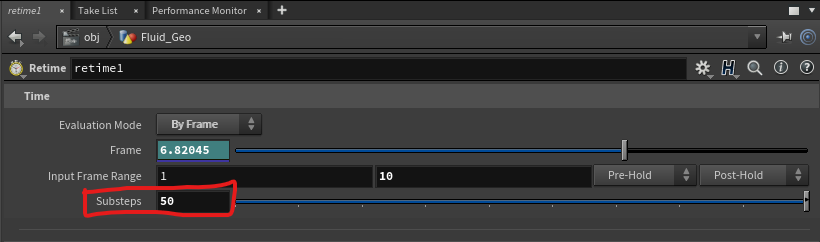
Retime Node - Substeps
update as of 21-oct-2024
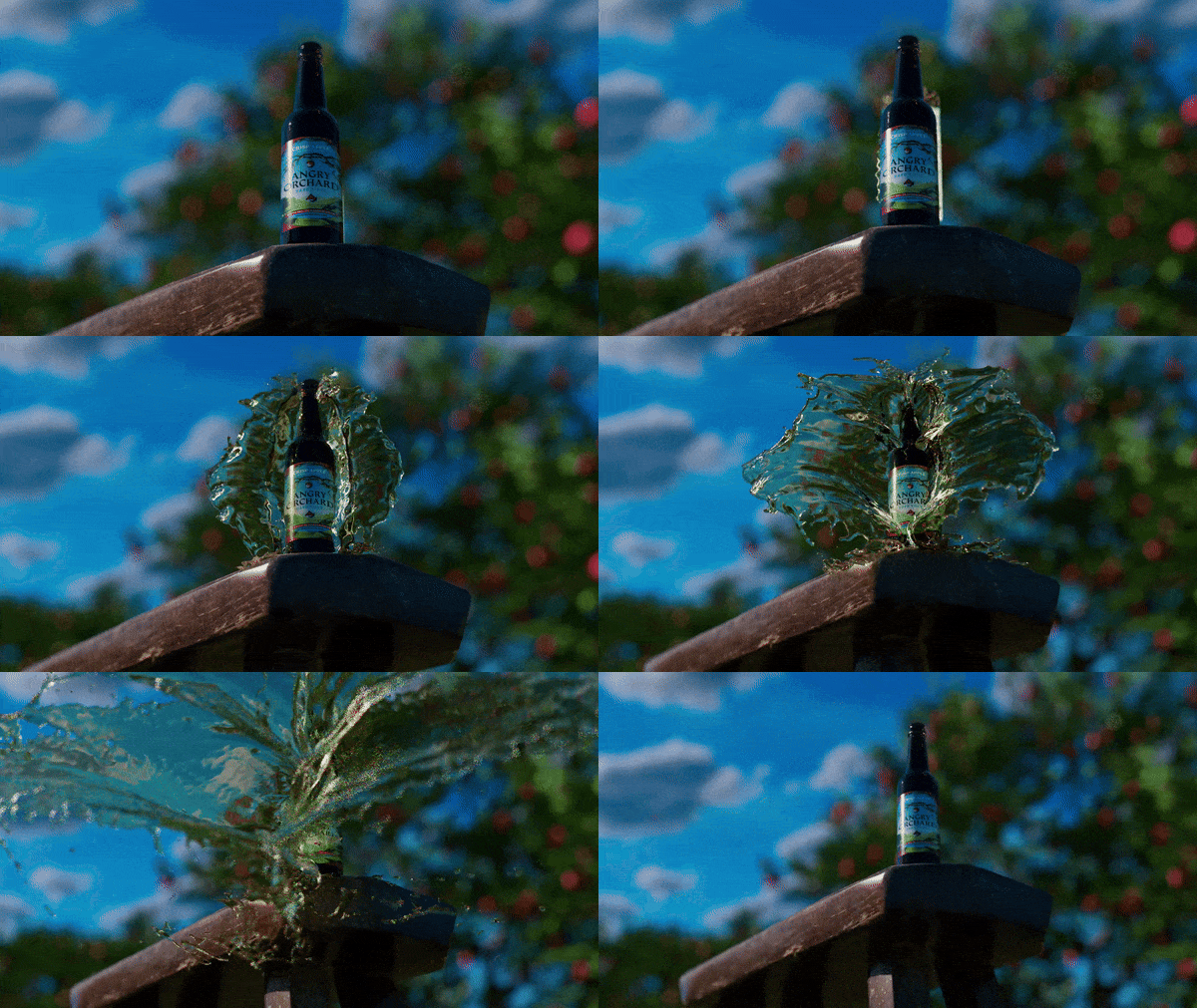
Test render of the splash shot (shot 6)
- The lighting and glass shaders were refined.
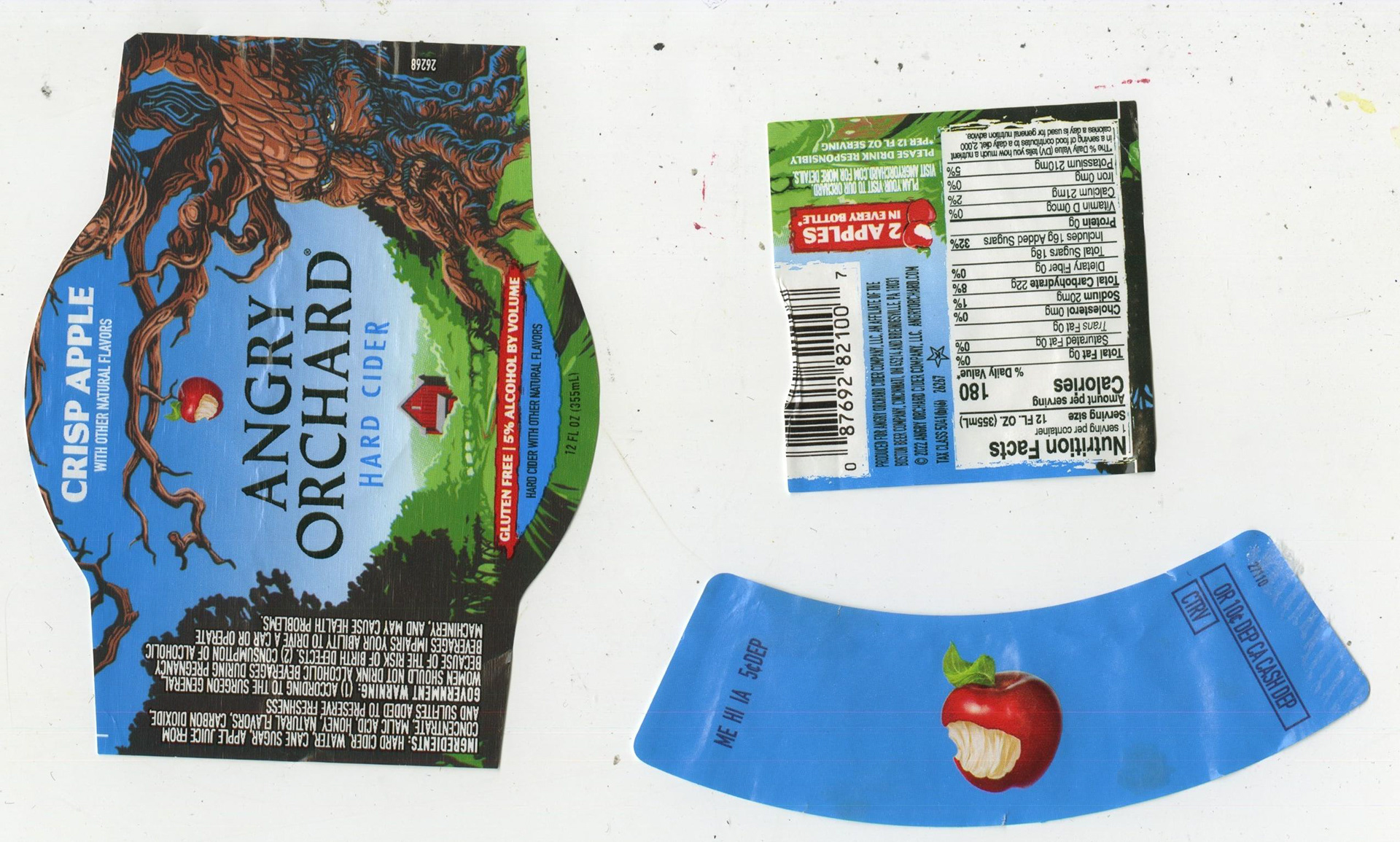
- The bottle’s textures were added by scanning the actual labels from the physical bottle.
- Multiple particle separations and substeps were tested to resolve artifacts caused by stagnant particles, but the issue remains unresolved.
Test render of the bubbles shot (shot 5)
To eliminate the black core at the base of the bubbles and prevent bubbles from originating directly beneath the apples, the following adjustments were made:
1. The apples' collision shape was changed from a convex hull to a concave shape to improve the accuracy of their interaction with the fluid.
2. The foam generation location was adjusted slightly higher to prevent unwanted bubbles from forming at the base.
3. The volume source responsible for generating air pockets was scaled down to be slightly smaller than the apples.
The lighting was adjusted to better align with the look of shot 3, and caustics were introduced underwater by using a gobo to project light patterns.
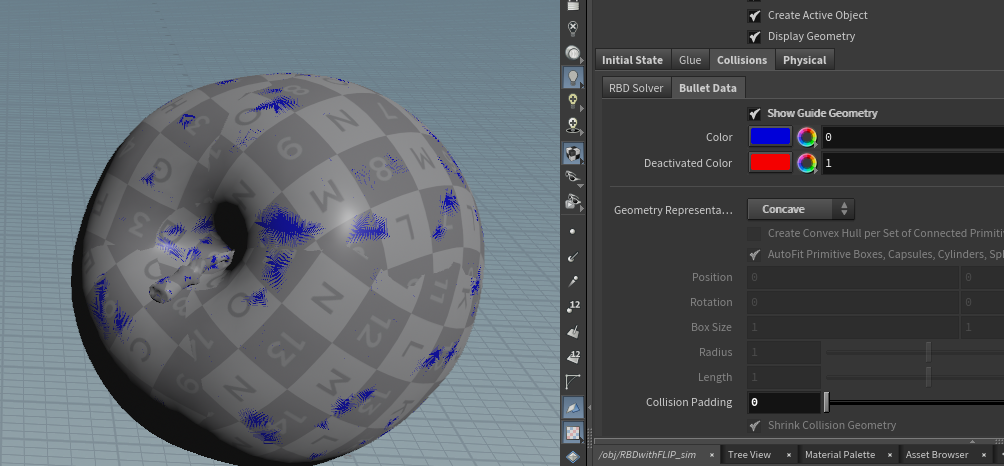
1. (a) Concave Collison
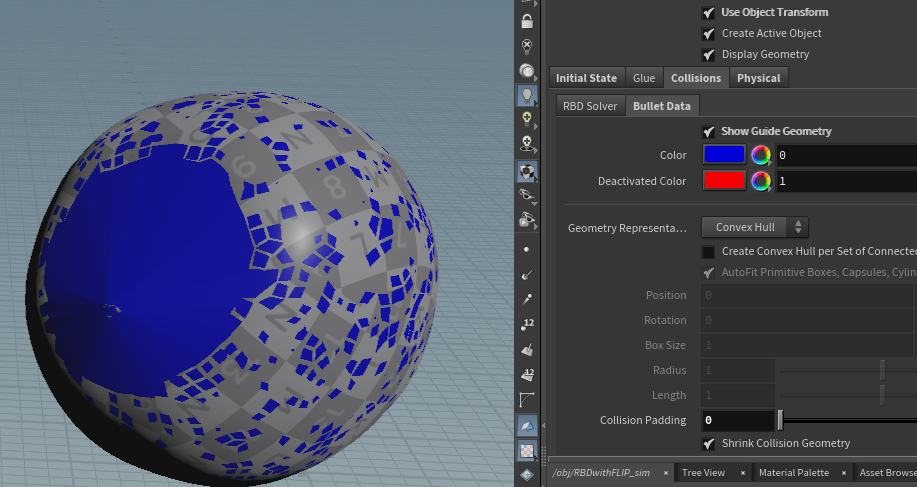
1. (b) Convex Collison
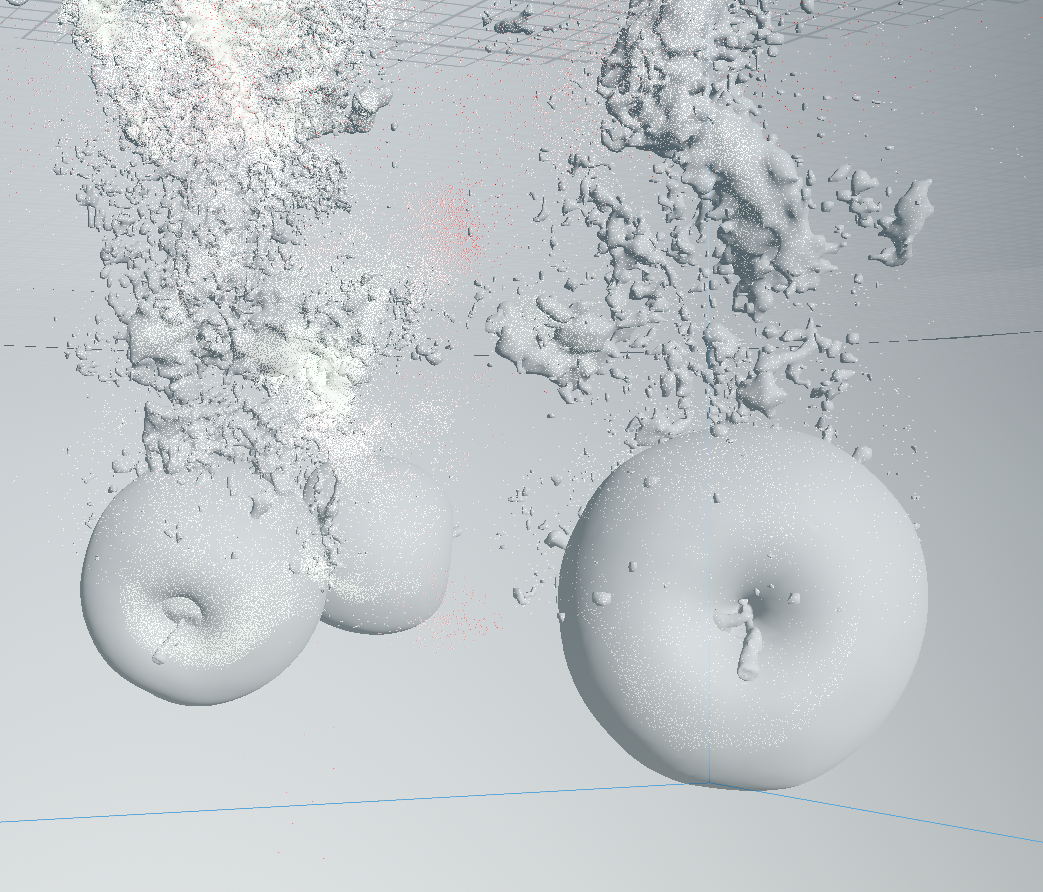
2.(a) Foam Location
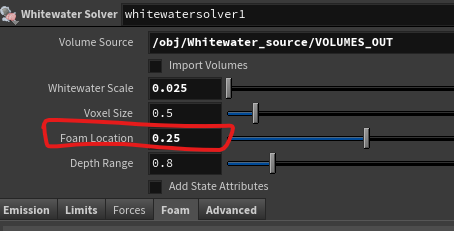
2.(b) Foam Location
3. (a) Scaling the Volume source